Levering Up Your Specialists With On-Demand Labor: What It Looks Like In Practice
See how businesses use Veryable’s on-demand labor model to reallocate surrounding work and get more output from the specialists they already have.

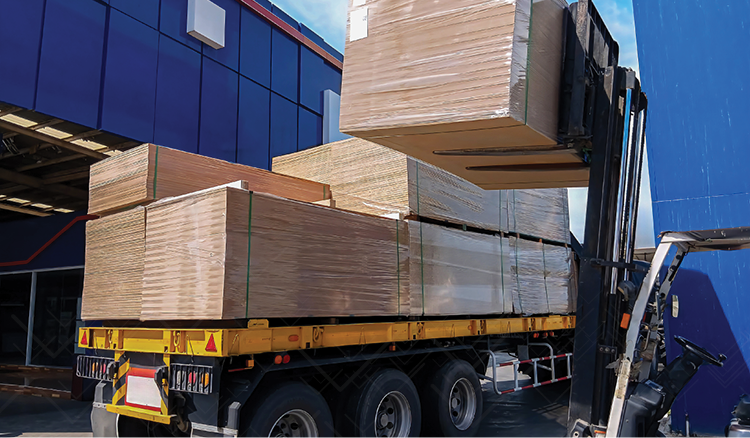
By the middle of peak season, many building materials operations are no longer managing against the original forecast. They are managing against the accumulation of everything the forecast could not fully account for once the season was already underway. Weather delays compress project timelines across entire markets. Contractors begin pulling orders forward simultaneously once work resumes. Morning loading windows tighten while outbound volume and contractor pickup traffic increase at the same time. Supervisors start reallocating labor between staging, loading, receiving, and yard support simply to keep material flowing through the operation.
The result is a pattern many suppliers experience every summer. Overtime climbs across the warehouse, experienced employees absorb longer hours, and the operation gradually shifts from proactive execution into continuous recovery mode as each new surge arrives before the previous one has fully cleared.
That's why more building materials suppliers are turning to Veryable's on-demand labor model.
The pressure points stack across the operation in a familiar order, even when the timing changes year to year. A wet stretch puts contractors behind across an entire market. When the weather clears, project schedules compress, and pickup demand surges into the same loading windows. Will-call traffic climbs at the front of the yard while contractor accounts pull forward delivery requests they had spread across the next two weeks. Outbound staging falls behind, which pushes loading times later in the morning and stacks pickup wait times for contractors who cannot afford to lose a half-day on the jobsite.
Once those pressures compound, the operation absorbs the difference through the workforce already on the floor. Supervisors pull forklift operators off receiving to support loading. Yard support gets reallocated to assist contractor pickups. Returns processing and put-away slide later in the week. The team finishes the day, but the operation has been running in recovery rather than executing the plan. Every week spent absorbing pressure this way also shrinks the buffer available for the next round of weather or the next project surge. The compounding effect, not the original surge, is what defines the back half of peak season.
Peak season problems in building materials are rarely caused by a lack of planning. They happen because traditional staffing was never designed to flex with conditions in the first place. The plan that worked through spring was static by design, and once volume moves outside it, the operation has no real way to adjust beyond stretching the workforce it already has on the floor.
Seasonal hiring is built around hitting a target headcount before the season begins. Success is measured by whether the roles are filled by start date, not by whether the resulting workforce can flex with day-to-day conditions once peak season is underway. Once headcount is set, the operation has limited ways to respond to a surge beyond the levers already on the floor. Overtime climbs across the warehouse, shifts run later into the evening, and supervisors step away from their own responsibilities to work loading, staging, and pickup coverage directly. Each of those works for a week or two. None of them scale across the months that actually define peak season, and the cost compounds quickly through fatigue and hours absorbed by the same experienced employees every surge week.
Temp agency coverage is the channel most operations reach for when those internal levers stop holding, but the channel carries its own structural limits during the months the operation needs it most. Worker selection and placement sit with the agency rather than the supplier, which leaves the operation with limited visibility into who is arriving on a given shift and limited control over who returns. Response time depends on recruiter coordination and placement timelines, which slows how quickly the channel can react when conditions change. Bill-rate markups also climb across the busy season, often without any corresponding change in who the agency is sending.
The deeper issue is that both channels were designed to maintain a target headcount across a planning window. Neither was designed for real-time labor capacity adjustments as conditions move week to week, and that is the gap the operation actually needs to close once peak season is underway.
Veryable is an operational tool, not a staffing solution. It is built to do what traditional staffing cannot: adjust labor capacity in real time as conditions move. Businesses post work opportunities (called Ops on the platform) for specific shifts and time windows, and the independent workers on Veryable, called Operators, review the work and accept it directly. The model is on-demand, which means the operation can scale labor day by day, often with less than a day's lead time, deploying it when contractor traffic surges, when weather compresses fulfillment, or when outbound staging falls behind, and scaling back when conditions ease. It sits around the existing workforce rather than in place of it.
Selection sits with the operation rather than with a third party. Businesses build work opportunities (called ops) with clear shift windows and skill requirements, review Operator profiles and prior work history before posting, and decide directly who is invited to the work. After each shift, the business rates the Operator, and those ratings follow the Operator across future work opportunities. The Operators who perform become the group the facility can request directly, and that group is what a labor pool actually is on Veryable: a bench of Operators the operation has worked with before and chosen to invite back.
From there, work opportunities can be sized to whichever function is under the most pressure on a given day. In a building materials operation, that typically means outbound staging, contractor pickup support, loading, yard support, forklift assistance, returns processing, weekend recovery shifts, backlog reduction, and callout coverage.
What this changes is the operation's ability to respond. Surge weeks are absorbed by adding supplemental labor rather than by stacking overtime onto the same experienced employees. Supervisors spend less of the day rebalancing the floor around coverage gaps. The operation can add capacity around the pressure points that actually define peak season, rather than running every week against a fixed staffing plan built before conditions were known.
A regional building materials supplier in the Southeast began using Veryable mid-season after several rain stretches compressed contractor demand into shorter morning loading windows. Going in, outbound staging was running behind, contractor pickup wait times during morning rush were averaging over 45 minutes, weekly warehouse overtime was running 18 to 22 hours per employee, and supervisors were spending the majority of their day covering fulfillment gaps on the floor rather than running the operation.
The operation began posting work opportunities across loading, yard support, and outbound staging during the highest-pressure days of the week. Within two weeks, weekly warehouse overtime was down approximately 75%, average contractor pickup wait times during morning loading had dropped from over 45 minutes to under 20 minutes, and supervisors had recovered an estimated 12 to 15 hours per week back into leadership functions rather than floor coverage. The operation was also clearing the same daily contractor volume noticeably earlier in the morning window, which gave the yard a usable buffer before afternoon will-call traffic arrived.
By July and August, the supplier was absorbing back-to-back weather-driven surges without extending shifts, without rebuilding the weekly schedule on the fly, and without pulling leadership back onto loading.
Getting started on Veryable does not require an overhaul of the operation. Most operations begin with a single area under pressure, typically a morning loading shift, weekend recovery coverage, or contractor pickup support, and expand from there as the labor pool develops. The Veryable team works directly with each operation to walk the building, understand daily flow and pressure points, and identify where on-demand labor will deliver the most immediate operational benefit. From that starting point, the labor pool builds through normal use, and the operation has a familiar bench of Operators in place by the time the heaviest weeks arrive.
Get Started Start a conversation with our team, or create a free business profile to begin building your labor pool.
Learn More Click here to learn more about how on-demand labor can support your peak season.



Create your free business profile and begin building your on-demand labor pool today.