Levering Up Your Specialists With On-Demand Labor: What It Looks Like In Practice
See how businesses use Veryable’s on-demand labor model to reallocate surrounding work and get more output from the specialists they already have.

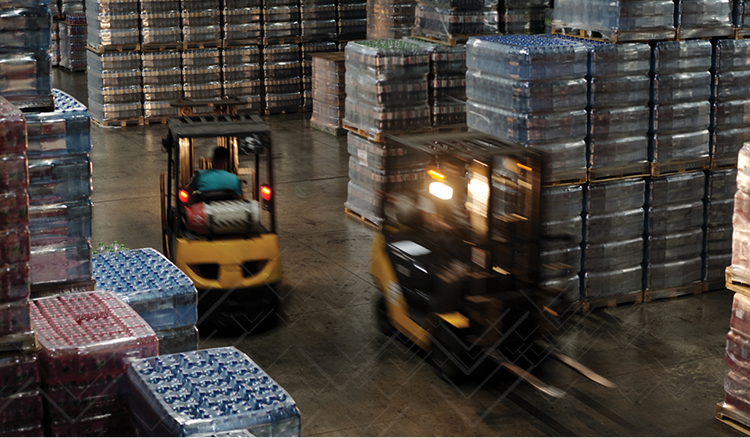
By mid-May, most beverage distributors have already begun or completed the bulk of their summer hiring. Seasonal teams are trained, schedules are built, and labor budgets are largely set well before the hardest weeks of the year arrive. What the plan cannot do is hold steady through the conditions that actually define peak beverage season once volume starts moving.
A heat wave lifts replenishment volume across an entire territory for two straight weeks. A holiday compresses three days of fulfillment into two. A retailer promotion drops a sudden volume spike onto picking and loading with limited notice. A local event pulls additional volume into one warehouse while routes are already running long. Each of those events is predictable in the abstract, but the combination, the timing, and the magnitude are not, and that is the gap a seasonal labor plan is being asked to absorb.
When summer volume moves outside the plan, the operation feels it in the same places every year.
Pick lines fall behind, and supervisors start pulling people off other functions to clear the backlog. Loading windows compress, and trucks roll later in the day. Routes return late, which pushes start times for the next day and shortens the window for next-day fulfillment. The warehouse team absorbs the difference through extended shifts, and overtime climbs across every department that touches the order. In beverage distribution, missed fulfillment windows compound quickly because delivery schedules, retailer expectations, and route sequencing leave little room for recovery once the warehouse falls behind.
The downstream cost is not only in hours. Fatigue slows pick rates and increases errors. Supervisors spend more of their day on attendance, coverage, and schedule triage than on running the operation. The tenured employees who have already worked through spring are the ones absorbing the longest hours, and that is where turnover risk concentrates for the rest of the season.
Every week the operation runs in catch-up mode is also a week it cannot take on incremental volume. Retailer-driven upside, additional orders, and off-cycle promotional support all depend on having the capacity to say yes when the call comes.
Hiring more people before the season addresses the predictable side of summer volume, but it does not address the variability that defines peak. Peak beverage demand is not a single difficult week that a larger seasonal crew gets through. It is sustained pressure across multiple months, with surges that stack on top of each other and shift week to week without notice.
The week-to-week volume does not move in a fixed pattern, and the operation cannot run a payroll that flexes with it the way the orders do. Carry too little seasonal labor and the warehouse falls behind on the surge weeks. Carry too much and the operation pays for hours it does not need on the slower weeks. Either way, overtime ends up filling the gap, and overtime alone is not built to absorb three or four months of demand variability without compounding cost, fatigue, and turnover risk along the way.
Most beverage distributors run their seasonal labor through a combination of direct seasonal hires brought on before the season and temp agency coverage layered in throughout. When demand exceeds the plan mid-season, temp coverage is usually where the operation turns, because launching a new direct hiring push takes longer than the surge that triggered it. Both channels run into the same constraints during the months when the operation needs them to perform.
Beverage distribution is competing for the same workers as retail, logistics, hospitality, and every other operation staffing up for the season, and by June and July, the pool of reliable warehouse labor tightens significantly, particularly for physically demanding and night-shift work. The seasonal hires who do come on tend to be sourced and screened faster than the operation would prefer, and inexperienced workers in a fast-paced beverage warehouse, where heavy cases move constantly, create safety risk and accuracy risk that supervisors have to manage on top of the throughput problem.
Temp agency coverage can fill immediate gaps, but distributors typically receive whoever is available rather than the worker best suited for the pace of a beverage warehouse, with no guarantee that a replacement sent the next day will be stronger. Supervisors end up evaluating workers shift by shift and re-explaining workflows around capability gaps on the floor. The labor fills slots on the schedule without building the repeat familiarity and proven performance that helps the warehouse move volume more efficiently over the season.
Both paths also pull administrative time into the operation during the busiest months of the year, whether that is I-9 and onboarding paperwork on the direct-hire side or worker classification and payroll handoffs on the agency side, all of which land on supervisors and HR when they can least afford it.
Veryable gives beverage distributors a way to add labor capacity to specific shifts and time windows as throughput requirements move. The model is on-demand, so the operation can post for Operators when a surge hits and pull back when volume levels off, without committing to permanent headcount. It sits around the existing workforce rather than in place of it, and Operators can be deployed against whatever is under pressure on a given day: case picking and order build, loading and dock support, repack and pallet breakdown, cross-dock surges, weekend and night warehouse shifts, backlog reduction, and callout coverage.
The platform also reaches a labor pool that conventional hiring channels do not. Veryable has access to thousands of available Operators in mid-sized markets and tens of thousands in larger metros, many of whom have chosen on-demand work as a way to supplement or replace traditional employment. A distributor sourcing through Veryable is not pulling from the same depleted applicant pool as every other employer staffing up for summer.
Quality risk is managed inside the platform rather than left to the distributor to absorb on the floor. Every Operator is rated by the business after each shift, and those ratings follow the Operator across every post. Facilities review profiles before posting, and Operators who underperform are not invited back. The ones who do perform become the group the facility can request directly. That group is what a labor pool actually is on Veryable: a bench of proven Operators who know the facility, the workflows, and the pace of the operation.
The pool develops through normal use of the platform in the months leading into peak. By the time the hardest weeks of summer arrive, the operation is calling on Operators who have already worked the building and produced, instead of training strangers in the middle of a surge.
Gold Coast Eagle Distributing, a Sarasota-based beverage distributor, was running into the same pattern many beverage operations hit heading into summer.
Overtime hours were climbing, night warehouse shifts were difficult to cover, and managers and sales staff were regularly stepping onto the warehouse floor to help build orders and load trucks.
The team used Veryable to build a labor pool of Operators who could support the operation as throughput requirements changed throughout the week.
The result was improved on-time delivery, reduced overtime dependence, less pressure on core team members and a more stable operation across periods of peak volume.
Read the full case study to see how the labor pool was built and how it carried the operation through peak weeks.
Veryable can help distributors add labor quickly when demand surges hit, but the biggest advantage during peak season goes to the operations that started building their labor pool before the warehouse is already under pressure. Operators who already know the facility, workflows, and pace of the operation are far more valuable during a surge than bringing in unfamiliar labor at the last second.
The distributors in the strongest position by July and August are usually the ones that started building that bench earlier in the season through normal operational needs like weekend shifts, callout coverage, and backlog reduction.
Distributors who wait until overtime spikes and service levels start slipping will still be able to post work through Veryable. They will just be building their labor pool while already operating behind.
Start building your labor pool now, before peak pressure forces the issue.
Start a conversation with our team, or create a free business profile to begin building your labor pool.
Click here to learn more about how on-demand labor can support your peak season.



Create your free business profile and begin building your on-demand labor pool today.