Yarder Manufacturing
See how Yarder Manufacturing paired on-demand labor with its experienced workforce to double throughput, move backlogged work through production, and take on larger projects.
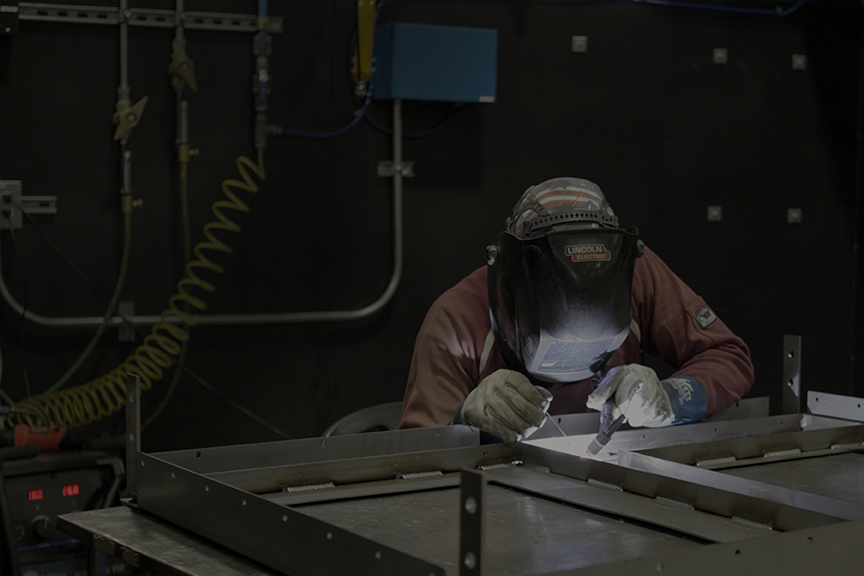
Yarder Manufacturing Doubles Throughput and Takes On Larger Projects With On-Demand Labor
“Once we started using Veryable, we had a large client ask us if we could help them with a very large project and we would have said no two months ago.”
Jake Ibarra, Head of Engineering
Yarder Manufacturing is a family-owned sheet metal fabricator in the Toledo, Ohio, area with more than a century in business and a fifth generation of the family working at the company. It produces components for original equipment manufacturers across industries ranging from furniture and currency equipment to power sports and energy systems. Its capabilities include laser cutting, forming, welding, and machining, with hands-on support from design through manufacturing and shipping.
Those customers expect shorter lead times, consistent quality, and competitive pricing. To meet those expectations and take on larger projects, Yarder invested in equipment and a new facility. But putting that investment to work also required rethinking how it assigned production tasks and used the experience of its full-time workforce.
Through Veryable’s On-Demand Labor marketplace, Yarder built a Labor Pool of individual workers, known as Operators, to work alongside its core team. Pairing Operators with experienced employees helped Yarder move backlogged work through production while putting its existing employees’ skills to use across more departments. With Operators also helping staff a new night shift, Yarder doubled plant throughput and took on larger projects it previously would have declined.
More Space, but Work Still Waiting
Yarder had known for 10 to 12 years that it needed more space to continue growing. Its 50,000-square-foot facility in North Toledo had served the business for decades, but there was no longer room to expand. Moving to a new 100,000-square-foot plant at Legacy Business Park doubled its space and provided room for a future expansion to 250,000 square feet.
Along with room to grow, the move gave Yarder a chance to improve how work moved through the plant. At the old facility, employees loaded and unloaded trucks in the parking lot because there was no dock. The new plant added a loading dock and allowed Yarder to arrange its equipment around the flow of production.
The new layout was already improving that flow, but parts still sat waiting between production steps. Sales staff tracked down stalled orders, while equipment ran for only part of the day.
For Jake Ibarra, Head of Engineering, those waiting parts represented a clear cost: “It’s money sitting there.”
Getting those parts moving and using its equipment for more of the day meant rethinking how Yarder deployed labor in the new plant.
Putting More Equipment and Experience to Work
To address those needs, Yarder took another look at Veryable. A local powder-coating vendor had recommended the platform, and Yarder had considered it in 2025. At the time, though, the company was preparing to relocate and hadn’t fully understood how a Labor Pool could fit its business.
After the move, Yarder began applying Veryable to specific production tasks. One of the first assignments was a repetitive spot-welding job. An experienced employee could set it up and teach an Operator to run it, then move to other work while the Operator continued the job.
On larger projects, Jake could pair an Operator with one skilled Yarder employee instead of assigning two full-time employees with the same knowledge. That allowed him to spread experienced employees across departments and keep more jobs moving at once.
Yarder also began using Operators for press brake and stamping work on day and night shifts, as well as grinding welded parts for painting or shipping. Across those assignments, training follows a consistent process: each Operator receives safety and PPE instruction before a shift leader or department head provides training on the assigned machine and tooling.
By posting daily opportunities for one to four Operators, Yarder built a Labor Pool of 19 trained Operators in just four weeks. As Operators returned, they became more familiar with Yarder’s parts, equipment, and expectations. That familiarity helped bring consistency to production and increase throughput.
With that Labor Pool to draw on, Yarder could bring in Operators as work changed and adjust how it deployed its experienced employees. “We can literally change day to day, week to week,” says Matt Yarder, Executive Vice President and a fourth-generation member of the Yarder family.
Extending Production Hours to Handle Larger Projects
That experience became especially valuable when a large customer approached Yarder with a major project. Jake says the company would have declined work of that size just two months earlier. This time, Yarder had the space and equipment in its new plant, along with experience bringing Operators into production alongside its employees. Matt says that familiarity helped leadership quickly determine how to staff the additional work, allowing Yarder to pursue an opportunity it might previously have hesitated over and missed.
To carry out that plan, Yarder also launched its long-discussed night shift. Five existing employees volunteered to move from days to nights, receiving a shift premium and opportunities to lead the new team. With Operators making up half the shift, Yarder put its equipment to work for more of the day to handle the additional volume.
According to Jake, adding the night shift doubled plant throughput. Within weeks, Matt described how the new shift was performing:
“We are producing beyond what I thought we would on our new night shift that we’ve added, and a large part of that is because of the operators we brought on through Veryable.”
Working Through the Production Backlog
Alongside those new projects, Yarder was moving parts that had been waiting in laser cutting and forming. Jake reports that almost 90% of that backlog advanced through those departments to welding and outside finishing, although some parts were still with finishing vendors.
As orders moved forward, sales staff had fewer stalled jobs to track down. Matt says pallets that previously could sit for a week were getting processed and shipped. That progress also gave sales staff more confidence in the commitments they made to customers: Jake says they could tell customers when their parts would be ready.
Some projects were also moving through Yarder’s system in a week or less, compared with the three or four weeks Matt had expected. That faster pace meant suppliers needed to handle more work. In one week, Yarder had two and a half semitrailer loads ready for painting, compared with its usual one load per week.
“I got to make sure our suppliers know about Veryable, to keep up with what we’re going to be giving them,” Matt explains.
He sees the same potential beyond Yarder’s suppliers. In Matt’s view, a larger, more versatile pool of Operators across Toledo and northwest Ohio could help the region’s manufacturers respond to new projects and enter new markets faster, giving them an advantage over markets slower to adopt the approach.
Keeping Specialists Focused on Their Core Responsibilities
Back inside Yarder’s plant, the benefits extended to the full-time employees doing the work. Jake had initially worried they would feel threatened by Operators coming in to do their jobs. Instead, he found employees felt reinvigorated as Operators took on repetitive tasks, allowing employees to spend more time on meaningful, technical work.
“They’re not stuck with the mundane jobs, the day to day stuff,” Jake explains. Working alongside Operators also gave employees opportunities to pass on their knowledge by teaching them how to perform those routine tasks.
Making More Deliberate Full-Time Hiring Decisions
With Operators helping keep production moving, Yarder could also take more time to evaluate candidates for permanent positions.
As Matt explains, “we can fill in the work that’s immediate with our labor pool and take some time to really vet other candidates and not feel rushed into that decision.”
For Jake, that means being able to pass on applicants he previously felt pressured to accept. “I get to be much more selective in our employment pool, and that builds a stronger culture for our full time employees.”
Planning for Growth With a Flexible Workforce
Beyond deciding whom to hire, Matt is reconsidering the overall workforce strategy for Yarder Manufacturing. With the evolving needs of its customers and a Labor Pool to draw on with Veryable, Yarder can build its core team around consistent production needs and bring in Operators as additional work comes in.
That approach gives Yarder flexibility when demand slows, too. The company can reduce Operator usage to match the workload, easing the pressure to reduce permanent headcount. Keeping some labor variable can therefore help protect the experienced employees its operation depends on. Then, when orders pick up again, Yarder can draw on its established Labor Pool to increase production alongside that core team.
This ability to respond to changing demand also supports Yarder’s longer-term growth plans. Jake says the company hopes to double or triple its business over the next 10 to 15 years, with additional shifts forming part of that expansion. As Yarder pursues that growth, its Labor Pool gives it a way to support larger projects, extend production hours, and adjust to changes in volume and job mix while continuing to develop its permanent team.
Build a Workforce That Scales With Demand
Create your free business profile and begin building your on-demand labor pool today.